Introducing Intern Grace
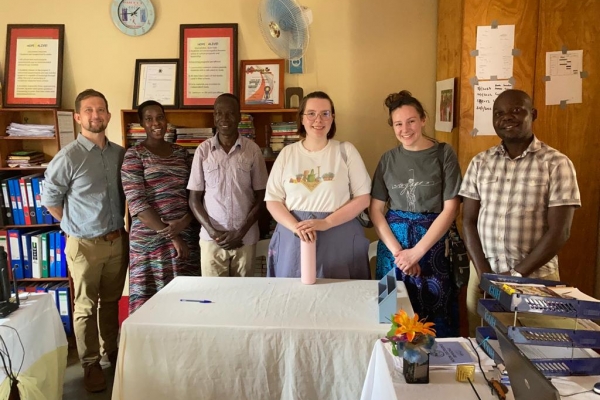
Hello Hope Alive! family! My name is Grace Ernst, and I am serving at the Koro site, just south of Gulu. I am from a small agricultural community in Ohio and am a university student in the States. I will be bringing you updates so you may learn how your support and prayers are impacting us on the ground. I will often mention my fellow intern, Tessa, as we are experiencing almost everything together.
There are some common cultural words you will see repeated in the coming posts. Foreigners are called mzungus (moo-zoon-goos). The vehicles that taxi people around are called bodas (bow-duhs). They are long, skinny motorcycles, often manufactured in China, operated by drivers who transport people and items all over the city. For 5,000 Ugandan shillings (about 1.50 USD), you can get a ride from one side of the city to the other.
I began my time in Uganda learning the basics of Ugandan culture and collecting the items that Tessa and I would need throughout our time in Gulu. We are using bodas as our main mode of transportation. It’s been fun learning how to give directions in a city that has few street names or addresses. Homes are known by landmarks such as big palm trees or other local features. We’re very fortunate to have a trusted network of bodas that we know are fairly priced and will take us safely from one place to the next. It’s common for mzungus to be charged a higher price. Since Ugandans assume we are wealthy (and, by comparison, we are), they often attempt to charge foreigners more. For example, if a mango costs 1,000 shillings for a Ugandan, vendors might charge a mzungu 1,500 shillings. We’ve learned that it’s a good idea to compare prices at other stands in the market, and make sure we’re paying the correct price. I’ve already learned many more cultural things, from verbal cues to how to ask for a ride home.
We’ve also had the opportunity to see some of the latest projects that Hope Alive! is doing to strengthen local families. They have a farm just on the edge of town where they are developing sustainable, agricultural processes to pass along to the community, including bee-keeping and tree-planting. The goal is to preserve the forests as well as keep bellies full and bodies nourished. I have so much hope for the long-term impact of these projects; they are sustainable and lead to the discipleship of families across the city.
God truly is doing so much work in Uganda through Hope Alive!. He is using the hands and feet of dedicated global workers alongside spirit-led locals to build up these communities both physically and spiritually.